AIM Implementation History Assessment
The AIM Implementation History Assessment, developed by Don Harrison (Founder of IMA), analyzes your organization's track record with change initiatives to identify success patterns and failure triggers. Based on 40+ years of IMA's AIM and the core principle that "past behavior is the best predictor of future behavior," this assessment reveals why some changes stick while others fail—helping you avoid repeating costly mistakes.
Created by:

Peacock Hill Consulting
Powered by IMA Worldwide
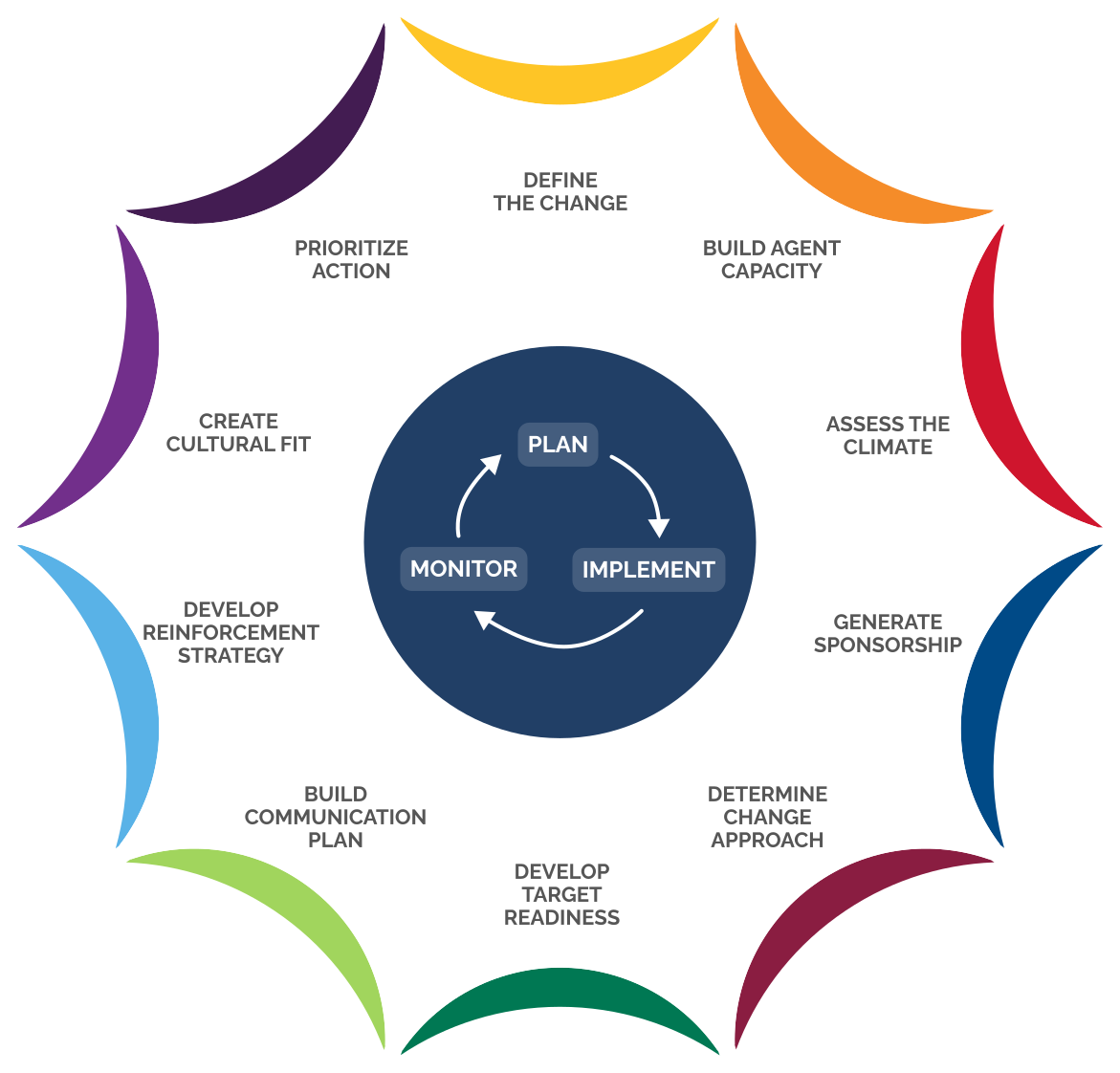
Assessment Benefits:
Identify Systemic Patterns
Discover whether your organization typically struggles with leadership involvement, target readiness, or reinforcement systems—enabling you to address root causes rather than symptoms. "Own the past to build confidence for the present. Unless you understand and acknowledge your past history, Targets, Agents, and even Sponsors will likely lack trust.
Avoid Repeating Expensive Mistakes
Understand why past initiatives succeeded or failed so you don't waste resources on approaches that have historically failed in your organization. "If a senior executive stands up and says 'this time will be different,' it's pretty much a guarantee to everybody that it's going to be the same old thing"—unless you actually do something different based on what you've learned.
Build on Proven Successes
Leverage what has worked before—replicating successful change tactics and reinforcement strategies that align with your organizational culture.
Make Better Implementation Decisions
Use data-driven insights to determine realistic timelines, required resources, and critical intervention points for your next change initiative.
What This Assessment Identifies
Based on Don Harrison's Accelerating Implementation Methodology, the Implementation History Assessment helps you:
Estimate degree of difficulty for your upcoming change
dentify systemic weaknesses in past implementations
Determine effort and investment needed for success
Predict points of resistance before they emerge
Form strategies to manage resistance proactively
Assess competing priorities and organizational stress

No change occurs in isolation. It occurs in the context of all priorities competing for resources (stress) and all lessons previously learned about implementation (history).
AIM principle
Sample Questions
Implementation History
When changes are announced, people expect them to be successful in their implementation.
Leadership Involvement
During significant change, managers usually "walk their talk" (their actions match their words).
Motivation
There are clear rewards for implementation.
Target Readiness
We effectively manage the inevitable resistance to major change.
Agent Capacity
Change Agents (employees responsible for the change) are usually highly respected with a successful track record.
Communication
We effectively communicate in a way that everyone knows what will be expected of them during implementation.
Cultural Fit
We focus on successful implementation for the organization, rather than what is best for me or my department.
Organizational Stress
We focus on a small number of key changes at one time to avoid diluting our resources.
Structure
The formal organizational structure is conducive to the successful implementation of change.
Involvement
In our organization people feel involved in how we will implement major change.
What You'll Receive

A consultative review with a Peacock Hill Consultant to:
- Address key questions and provide clear understanding
- Deliver an overall implementation risk profile (High / Medium / Low)
- Highlight systemic strengths and weaknesses across critical dimensions
- Identify early warning signs of resistance, capacity constraints, and competing priorities
In 2024, Peacock Hill Consulting acquired IMA, combining 40+ years of AIM research with modern transformation expertise. CEO Ann Marvin brings 25+ years as a developer, architect, portfolio manager, and coach—from startups to Fortune 100 companies—bridging technical depth with business acumen to help organizations make change stick.